China Top Esthetician Chemical Peel Suppliers?

Choosing a China-based esthetician chemical peel supplier takes more than comparing prices or attractive packaging. Professional buyers need clear product information, consistent manufacturing, and practical support. A peel’s acid type, concentration, pH, and directions for use all affect how it fits a treatment protocol. Small details matter.

This guide explores how to assess potential suppliers without treating promotional claims as proof. It considers ingredient specifications, batch records, product stability, packaging quality, and access to safety documents. Buyers can also ask about sample orders, production timelines, private-label options, and how the supplier handles questions after delivery. A polished website is useful, but it cannot replace verifiable documentation or direct communication.

The right esthetician chemical peel depends on the intended professional setting, client needs, and the training of the practitioner. Request current instructions and follow the manufacturer’s guidance; do not assume that products with similar labels perform alike. Import and product requirements may also differ by destination, so buyers should confirm applicable requirements before placing an order. Some supplier details can be difficult to verify from a distance. That deserves honest attention. The sections ahead offer a practical framework for comparing Chinese manufacturers and distributors, asking focused questions, and spotting gaps before committing to a larger purchase.
China Top Esthetician Chemical Peel Suppliers?

Define Esthetician Chemical Peels: AHA, BHA, PHA and TCA

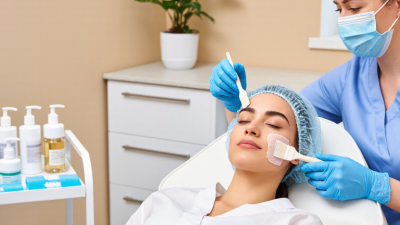
Esthetician chemical peels use acids to loosen the bonds between dead surface cells, helping improve texture and dullness. AHA peels, such as glycolic or lactic acid, are water-soluble and commonly target the skin’s surface. BHA, often salicylic acid, is oil-soluble and can move into oilier pores. PHA has larger molecules, so it often exfoliates more gradually. That matters. These categories are useful, but they do not predict every person’s response.

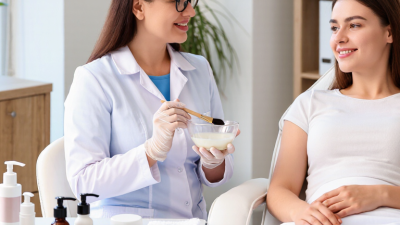
TCA, or trichloroacetic acid, is different. It can reach deeper layers than many superficial AHA, BHA, or PHA treatments, depending on its strength and how it is applied. It may involve more downtime and a greater risk of irritation or pigment changes. Not interchangeable. A qualified provider should assess skin history, sensitivity, current products, and treatment goals, then work within their professional scope. Even careful plans can need adjustment.

Tips: Ask what acid is being used and why it suits your skin. Share recent retinoid use, irritation, or a history of dark marks. Avoid picking or scrubbing peeling skin, and follow the provider’s aftercare and sun-protection guidance. Go slowly. A mild response is not a failed treatment.

Compare Peel Strengths: Clinical Glycolic Acid Protocols Commonly Use 20–70%

Clinical glycolic acid peels are often listed in the 20–70% range. A 2018 review in the Journal of Clinical and Aesthetic Dermatology describes these concentrations in professional practice. But percentage alone does not predict the peel’s effect. Formula pH, free-acid availability, contact time, and skin preparation all matter. Not the whole story. A 30% solution with a low pH may behave differently from a buffered 30% product. Treating the number as a simple strength ranking can mislead.

For supplier comparisons, request batch-specific concentration and pH specifications, ingredient documentation, and clear handling instructions. A clinician may select lower strengths for cautious superficial treatment, while higher concentrations call for closer control and trained application. Skin tone, sensitivity, recent irritation, and prior peel response should shape assessment and follow-up. The American Academy of Dermatology advises discussing risks and expected recovery with a qualified dermatologist before a chemical peel. Patch testing and conservative timing can help, though neither removes all risk. I still find protocols easy to oversimplify: a tidy percentage chart cannot replace observing the skin during treatment.

Map China’s Supplier Types: OEM/ODM Factories, Contract Labs and Brand Owners

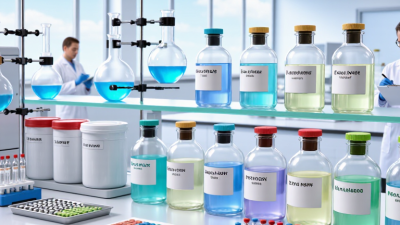
China’s chemical-peel suppliers generally fall into three groups: OEM/ODM factories, contract laboratories, and brand owners. OEM/ODM factories make products to a buyer’s brief and may support formulation, filling, and packaging. Ask whether the quoted formula is standard or customized. Contract labs focus more on development and testing; clarify who handles pilot batches and stability work. Brand owners sell under their own labels and may outsource production, so a polished catalogue does not prove factory capability.

The market is growing, but supplier types are easy to confuse. Grand View Research estimated the global chemical peel market at USD 2.4 billion in 2022, with a projected 7.2% CAGR from 2023 to 2030. This is a global estimate, not a China supplier count. For a practical comparison, request sample batch records, ingredient specifications, stability results, and clear answers about manufacturing responsibility. Check that the sample’s texture and labeling match the documents. Small details matter. A supplier may describe itself as an ODM while relying on a separate plant; that arrangement is not automatically a problem, but it should be disclosed and verified. One limitation: public market reports rarely separate Chinese OEMs, labs, and brand owners, so buyers should avoid treating market growth as proof of any individual supplier’s quality.

China’s Esthetician Chemical Peel Supplier Types

A qualitative comparison of typical roles across OEM/ODM factories, contract labs, and brand owners.

Scale: 0 = generally not a core role, 1 = often coordinated or varies by supplier, 2 = commonly a core role. This is a role-based overview, not market-share data; actual services vary by supplier and contract.

Verify Manufacturing Quality: ISO 22716 GMP and Batch-Level Certificates of Analysis

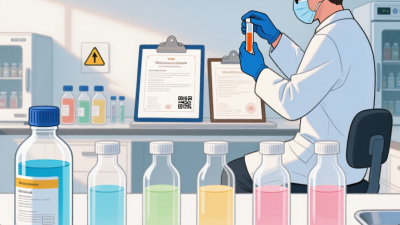
When comparing China-based esthetician chemical peel suppliers, look beyond a polished certificate image. ISO 22716 concerns good manufacturing practices for cosmetics; it is not proof that every batch meets its specification. Ask for the certificate’s scope, manufacturing-site address, validity dates, and issuing body. Check that the site named on the document matches the site producing your products. Small mismatch, big question.

Request a batch-level Certificate of Analysis (CoA), not a generic sample. Its lot number should match the product label and production records. For a peel, review the stated acid identity and concentration, pH, appearance, and relevant microbiological results. Ask which test methods were used, who approved the report, and whether results come from in-house or independent testing. A clear method matters; a number without context is hard to assess.

Good suppliers can explain how they handle out-of-specification results, changes to raw materials, and retained samples. Request a redacted example CoA and traceability records before placing an order. Compare dates and lot codes across documents. One limitation: even complete paperwork cannot predict every product outcome or replace your own supplier review. I would also check how promptly the supplier answers specific questions; vague replies deserve follow-up, though they are not proof of poor quality.

Evaluate Suppliers: Applicable NMPA Filings, Stability Data, MOQ and Export Support

China Top Esthetician Chemical Peel Suppliers?

Supplier checks should begin with classification, not a polished catalog. Ask whether the specific formulation requires an applicable NMPA filing, and request its filing details for independent verification. Do not assume every peel product follows the same pathway. The formula, intended use, and claims matter.

Request product-specific stability data, including real-time and accelerated results, packaging compatibility, pH, and active-acid concentration. A tidy PDF is not proof. Check dates, batch links, and test conditions; incomplete records should prompt follow-up, not guesswork.

Allied Market Research estimated the global chemical peel market at US$1.7 billion in 2021, forecasting US$3.1 billion by 2031. Growth makes supplier evidence more important, not less.

Commercial terms deserve the same scrutiny. Compare MOQ against realistic launch volume, then confirm whether price changes at higher quantities, sample availability, and production lead times. Ask for export-ready documents, such as a current specification sheet, certificate of analysis, safety data sheet, and destination-specific support.

Availability and requirements can vary by market, so confirm them before placing an order. Request a written account of how the supplier handles formula changes and out-of-specification batches.

One uncomfortable question: will the supplier share enough technical detail for your team to assess consistency? If the answer is vague, pause. I would not treat low MOQ as a substitute for reliable records.

advanced-floating-content-close-btn

🌞 New! Sun Lover’s Facial – Now $125

 Pamper Your Sunburned Skin with this Luxurious treatment. It will leave your skin hydrated, strengthened, and less inflamed with less pain and irritation.

Book now and give your skin the care it deserves.

Schedule Your Appointment Today »

Text: 714-743-4914

Call Now Button