3606 E. Chapman Ave, Orange, CA 92869
Contact us: 714-743-4914
3606 E. Chapman Ave, Orange, CA 92869
Contact us: 714-743-4914

Choosing the right partner among China’s top skincare manufacturers can shape your brand’s future. It affects product quality, launch speed, customer trust, and long-term costs. Experienced manufacturers often support OEM and ODM projects, from early formulation discussions to finished packaging. They may develop cleansers, serums, creams, masks, and sunscreen products for different market needs.
A reliable supplier should provide clear ingredient documentation, batch records, stability testing, and production samples. Ask about factory qualifications, quality-control procedures, minimum order quantities, and manufacturing capacity. Certifications such as ISO or GMP-related standards can offer useful evidence, but certificates alone never tell the whole story. Visit the facility when possible. Observe the filling lines, storage areas, laboratory equipment, and hygiene practices. Small details matter.
Your skincare brand also needs formulas that match local regulations and consumer expectations. A brightening serum may require different claims, testing, or labeling in different countries. Do not rely only on attractive samples or fast promises. Request full quotations, timelines, safety documents, and written agreements before production begins. Communication can still fail, especially across languages and time zones. Build room for revisions.
Some manufacturers excel at innovative textures, while others focus on stable, large-volume production. Few suppliers are perfect at everything. That is worth remembering. Compare their experience with similar products, not just their product catalogues. A thoughtful selection process can reduce reformulation risks and protect your reputation. The best partnership usually grows through transparent questions, careful testing, and realistic expectations.

A top skincare manufacturer in China is defined by more than attractive factory photos or low quotations. Reliable partners show practical manufacturing experience, qualified technical teams, and clear quality systems.
Look for documented GMP or ISO procedures, controlled production rooms, calibrated equipment, and trained operators. Ask how each ingredient is received, tested, stored, and traced. A serious manufacturer can explain this process without vague promises.
Product development also reveals professional strength. Formulators should discuss skin feel, stability, preservation, packaging compatibility, and realistic production limits. Request samples from small pilot batches, not only polished samples prepared for presentations.
Review microbial testing, stability data, safety assessments, and batch records. Communication matters too. A dependable team reports delays early and explains corrective actions clearly. No supplier is flawless. I have learned that honest limitations are safer than confident answers with no evidence.
Tips:
Visit the facility when possible. Check whether production records match the actual workshop. Ask for recent quality documents and independent test reports. Confirm minimum order quantities, lead times, packaging controls, and export documentation in writing. Keep approved samples for comparison during mass production. A useful warning sign is pressure to approve formulas before testing is complete. Choose consistency over impressive promises.
China’s skincare manufacturing network is concentrated around several capable industrial hubs. Guangdong, especially Guangzhou, Shenzhen, and Huizhou, supports high-volume facial care, masks, cleansers, and packaging integration. Factories here often offer fast sampling and flexible minimum orders.
Zhejiang provides strong private-label and contract manufacturing capacity. Ningbo and nearby production areas are known for creams, lotions, body care, and practical packaging solutions. Jiangsu, including Suzhou and surrounding cities, is valuable for laboratories, emulsions, and process control. These regions often connect manufacturers with testing facilities and experienced raw-material suppliers.
Capabilities differ sharply between facilities. A reliable manufacturer should provide formulation records, stability testing, microbial results, batch traceability, and clear ingredient documentation. Ask to review production areas, filling lines, warehouse controls, and quality procedures before signing an agreement. Check whether products meet the target market’s cosmetic rules, labeling requirements, and safety standards.
Experience matters more than attractive sample photos. A factory may produce excellent prototypes but struggle with large-scale consistency. That gap is easy to miss. Request pilot batches, retain samples, and compare viscosity, fragrance, color, and package performance after storage. Some suppliers communicate well but document poorly. Others have strong facilities but limited formulation creativity. Careful verification remains essential.
Key manufacturing hubs and skincare production capabilities
Guangdong has the broadest skincare manufacturing ecosystem, covering formulation, OEM/ODM, emulsions, serums, masks, and packaging integration. Zhejiang and Jiangsu are also strong in formulation and scale production, while Shanghai, Shandong, and Fujian offer more specialized or regional manufacturing capabilities. The scores represent the number of commonly available skincare capability areas in each hub, not company market share or production volume.
Capability areas assessed: OEM/ODM formulation, creams and emulsions, serums and lotions, sheet or wash-off masks, and integrated packaging support.
China Top Skincare Manufacturers for Your Skincare Brand
How to Evaluate Chinese Skincare Manufacturers
Choosing a Chinese skincare manufacturer requires more than comparing factory prices. Grand View Research valued the global skincare market at about $155.7 billion in 2022. It projects a 4.7% annual growth rate through 2030. McKinsey’s 2023 beauty report expects the wider beauty market to reach $580 billion by 2027. This growth increases pressure for stable supply and documented quality. Ask about production capacity, export experience, certifications, and product categories. A polished showroom proves little.
Evaluate evidence, not promises. Request batch records, raw-material specifications, certificates of analysis, microbial test results, and stability reports. ISO 22716-based practices should appear in training logs, cleaning records, pest-control files, and deviation reports. Visit the facility when possible. Watch a filling line. Check whether staff record weights, temperatures, and line clearance in real time. A useful audit also tests traceability. Can one finished lot connect to suppliers, operators, and shipment records within hours? Sometimes the answer is no. That limitation matters.
Compare samples after accelerated and real-time stability testing, not only by first appearance. Review viscosity, odor, color, packaging compatibility, and preservative performance. Confirm formula ownership, artwork rights, molds, and test data in writing. Ask how complaints, rejected batches, and recalls are handled. Review applicable NMPA requirements for products entering China, and verify the rules in each target market. I would not rely on one successful sample. It can hide weak controls. A second audit may feel excessive, but missed records are expensive.
| Evaluation Dimension | What to Evaluate | Practical Industry Benchmark | Documents or Evidence to Request | Priority | Suggested Score |
|---|---|---|---|---|---|
| Regulatory Compliance | Capability to support the regulatory requirements of each target market. | The manufacturer should distinguish between ordinary and special cosmetics in China and understand market-specific requirements. EU products generally require a Responsible Person, Product Information File, safety assessment, and CPNP notification before sale. | Regulatory checklist, product classification assessment, sample technical file index, and records of previous market filings with confidential information removed. | Critical | 1–5 |
| Quality Management System | Consistency and control of manufacturing, filling, packaging, and release processes. | A documented quality system should cover approved suppliers, batch records, deviation handling, change control, corrective actions, complaints, and product release. ISO 22716 is a widely used cosmetic GMP guideline. | Current ISO 22716 certificate, quality manual index, internal audit summary, deviation and CAPA procedures, and a sample batch manufacturing record. | Critical | 1–5 |
| Product Safety Testing | Testing for microbiological safety, stability, compatibility, and product-specific risks. | Testing should be based on the formula, packaging, intended use, and target market. Common programs include microbial limits, preservative effectiveness where applicable, accelerated stability, freeze-thaw, packaging compatibility, and challenge testing for water-based products. | Test protocols, laboratory qualifications, stability reports, microbial results, preservative challenge results where applicable, and packaging compatibility records. | Critical | 1–5 |
| Formula Development | Ability to create, adapt, and scale formulas for the desired skin type, claim, texture, and cost. | A reliable development process normally includes brief review, laboratory samples, formula revisions, pilot production, compatibility checks, and a defined formula-lock stage before mass production. | Development timeline, sample revision records, ingredient specifications, formula ownership terms, and signed formula approval procedure. | High | 1–5 |
| Ingredient Traceability | Control over ingredient identity, origin, specifications, storage, and lot traceability. | Each raw material should be linked to an approved supplier and lot number. Specifications should address identity, purity or quality parameters, storage conditions, and applicable allergen or restricted-substance requirements. | Approved supplier list, certificates of analysis, ingredient specifications, safety data sheets, lot-traceability example, and allergen declarations where relevant. | High | 1–5 |
| Minimum Order Quantity | Whether the required order volume matches the brand’s launch and replenishment plan. | MOQ varies widely by formula, packaging, decoration, and material purchasing. Small pilot orders may be possible with stock packaging, while custom packaging and printed components usually require higher quantities. | Written MOQ by SKU, separate MOQ for formula and packaging, setup charges, sample-order terms, and price breaks by volume. | High | 1–5 |
| Production Lead Time | Time required from approved purchase order to finished goods ready for shipment. | A practical planning range is often about 30–60 days for repeat production with available materials. New formulas, custom packaging, testing, or imported materials can extend the schedule. | Stage-by-stage production schedule, material procurement lead times, approval deadlines, holiday shutdown calendar, and historical on-time delivery data. | High | 1–5 |
| Packaging Capability | Ability to source, customize, assemble, and inspect primary and secondary packaging. | The supplier should control packaging dimensions, material compatibility, decoration quality, filling tolerances, barcode placement, closure performance, and artwork approval before production. | Packaging specifications, component inspection standards, artwork approval workflow, compatibility test results, and approved packaging samples. | High | 1–5 |
| Claims Substantiation | Whether marketing claims are supported by appropriate evidence and permitted in the target market. | Claims such as moisturizing, cleansing, or improving the appearance of skin require evidence appropriate to the wording. Medical or drug-like claims can trigger additional regulatory requirements in some markets. | Claim-support plan, ingredient literature, instrumental or consumer-use study reports, claim wording review, and market-specific label assessment. | Critical | 1–5 |
| Batch Release and Inspection | Controls applied before goods are released for shipment. | Finished-product release should compare results with approved specifications for appearance, odor, color, viscosity or other relevant physical properties, fill weight, packaging condition, and microbiological quality where applicable. | Finished-product specification, certificate of analysis template, release checklist, inspection sampling plan, and retained-sample procedure. | Critical | 1–5 |
| Supply Chain Resilience | Ability to maintain supply despite raw-material shortages, packaging delays, or production interruptions. | Lower risk is associated with qualified alternative suppliers, safety-stock planning, documented business-continuity procedures, and clear communication of material substitutions. | Business-continuity plan, critical-material risk list, alternative supplier qualification records, inventory policy, and substitution approval procedure. | High | 1–5 |
| Intellectual Property Protection | Protection of formulas, artwork, product concepts, customer information, and tooling ownership. | Confidentiality, ownership, permitted-use, non-disclosure, and tooling clauses should be defined in writing before technical information is shared or production begins. | Signed NDA, manufacturing agreement, formula ownership clause, tooling ownership terms, access-control policy, and subcontracting disclosure. | High | 1–5 |
| Communication and Service | Speed, accuracy, transparency, and accountability of project communication. | A dependable supplier should provide a designated project contact, written quotations, revision control, regular progress updates, prompt issue escalation, and clear responsibility for approvals. | Communication matrix, project timeline, quotation validity period, escalation contacts, meeting records, and response-time expectations. | Medium | 1–5 |
| Cost Transparency | Clarity of formula, packaging, testing, tooling, documentation, logistics, and payment costs. | A comparable quotation should separate one-time development or tooling fees from recurring unit costs and identify assumptions such as Incoterms, taxes, testing, artwork, and packaging quantities. | Itemized quotation, payment schedule, Incoterms, sample and tooling fees, testing charges, packaging assumptions, and change-order policy. | High | 1–5 |
China offers flexible partnership models for skincare businesses, including private label, OEM, and ODM production. Each option suits a different level of product control, budget, and development experience.
Private label is practical when you need a tested formula with customized packaging and labeling. It can shorten development time.
OEM manufacturing gives you more control over ingredients, texture, fragrance, packaging, and production volume.
ODM services support deeper development, from concept research to formula creation and testing.
A reliable manufacturer should explain each stage clearly, provide ingredient documentation, and confirm which tests are completed before production.
Details matter.
Ask for sample batches, stability data, microbiological testing, and packaging compatibility checks. A cream may look excellent in a jar but react poorly with an airless pump. A serum can also change viscosity after transportation.
Request batch records and clear quality standards. Confirm whether the factory follows recognized manufacturing practices and whether its documentation supports your target market’s requirements.
Expect revisions.
The first sample may not be ideal. Texture, scent, or absorption can miss your brief. That is normal, but repeated changes should follow written feedback and measurable standards.
Some timelines may shift because packaging molds, raw materials, or testing require additional time. Choose a partner that reports delays honestly, protects formula confidentiality, and maintains consistent communication from sampling through shipment. Your brand’s reliability depends on these operational details.
Choosing a skincare manufacturer starts with evidence, not attractive promises. Ask for product categories, production capacity, and recent quality records. Request samples made with your intended texture, fragrance, color, and packaging. Test them for appearance, scent, spreadability, and stability under heat and cold. Inspect the facility, even through a documented virtual audit. Review cleanliness, batch separation, equipment maintenance, and staff training. Small details matter.
Before signing, confirm minimum order quantities, lead times, payment stages, and revision policies. Ensure the manufacturer can provide ingredient specifications, allergen information, safety data, and batch traceability. Review its quality system against recognized cosmetic manufacturing practices. Ask how it handles failed tests, customer complaints, and product recalls. A low quote can still mislead. Hidden fees often appear in testing, tooling, or packaging changes.
Once selected, create a written product brief with measurable targets and approved references. Use one contact person on each side to prevent conflicting instructions. Approve a signed sample before mass production begins. Keep records of formulas, artwork, test reports, and shipment inspections. Track filling weight, seal quality, label placement, and carton condition from every batch. Factories can make mistakes. So can buyers. My own practical lesson is simple: unclear approval rules create expensive delays, even when the product itself is excellent. Review every change in writing, including small ones.
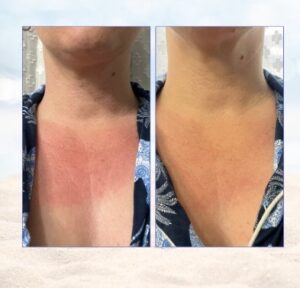
Pamper Your Sunburned Skin with this Luxurious treatment. It will leave your skin hydrated, strengthened, and less inflamed with less pain and irritation.
Book now and give your skin the care it deserves.
Schedule Your Appointment Today »
Text: 714-743-4914