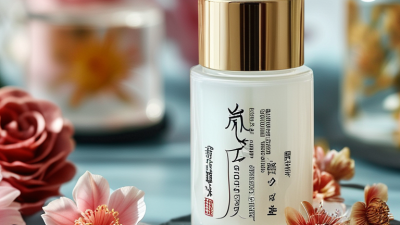
China Top Skin Care Treatment Suppliers for Global Buyers
China has become a significant sourcing base for global skin care treatment suppliers. Its manufacturing network supports facial devices, professional formulations, masks, serums, and salon-use products. Buyers can often compare private-label services, flexible order quantities, and integrated packaging under one roof.
A reliable supplier should provide traceable company details, product specifications, ingredient lists, and relevant quality records. Look for documented manufacturing controls, stability testing, batch identification, and clear inspection procedures. Certifications such as ISO or GMP may support confidence, but they should be verified rather than accepted at face value. Samples also matter. A serum’s texture, pump performance, carton strength, and label accuracy become obvious during hands-on evaluation.
Details reveal experience.
Global buyers should also review import rules, claims restrictions, labeling requirements, and product registration duties in their target markets. A supplier familiar with international documentation can reduce avoidable delays. Still, communication quality varies, and a polished catalogue does not guarantee consistent production. Buyers should request recent test reports, audit evidence, references, and a written quality agreement before placing large orders. This process may feel slow, especially when deadlines are tight. It is usually safer than relying on attractive pricing alone. Some suppliers excel at formulation but struggle with forecasting or after-sales support. Others offer impressive customization but require higher minimum orders. Careful comparison remains essential. This guide examines China’s leading supplier capabilities, verification signals, product development strengths, and practical risks, helping professional buyers make informed and responsible sourcing decisions.

China’s Skincare Market Exceeded RMB 400 Billion in 2023 (NBS)
China’s skincare market has entered a scale that global buyers cannot ignore. The National Bureau of Statistics reported approximately RMB 414.2 billion in cosmetics retail sales in 2023, up 5.1% year on year. This figure covers cosmetics broadly, not skincare alone. That distinction matters when evaluating supplier claims.
Euromonitor’s beauty and personal care analysis also identifies China as one of the world’s largest demand centers. Skincare remains strongly connected to daily routines, sun protection, hydration, and sensitive-skin care. In supplier discussions, buyers should examine product testing, ingredient traceability, stability data, and production consistency. A polished sample is not enough. Ask for batch records and quality-control procedures.
The market is large. It is not simple.
China’s manufacturing base supports flexible order quantities, packaging development, and fast formulation adjustments. However, lower prices can hide compromises in testing or documentation. Global buyers should compare suppliers through audited facilities, clear specifications, and independent laboratory reports. The China Household Paper Industry Association and other domestic research bodies continue to report rising consumer attention toward functional and safety-related claims. Yet consumer interest does not automatically prove product performance. A careful sourcing process still needs realistic claims, compliant labeling, and repeat batch verification.
NMPA Rules Divide Cosmetics into 2 Regulatory Classes for Global Trade
China’s cosmetics market is governed by the NMPA under the Cosmetics Supervision and Administration Regulation. The rules divide products into two regulatory classes: special cosmetics and ordinary cosmetics. Special cosmetics include sunscreen, hair-dye, perm, anti-hair-loss, and whitening products. Cosmetics claiming new efficacy may also enter this class.
The difference matters for global buyers. Special cosmetics require NMPA registration before import or sale. Ordinary cosmetics generally require product filing, with safety documents and formula information submitted through the official system. Imported products also need a responsible domestic agent and compliant Chinese labeling. NMPA guidance places safety assessment at the center of both routes. Do not treat filing as a simple form.
Market evidence supports careful supplier screening. China’s National Bureau of Statistics reported approximately RMB 414 billion in cosmetics retail sales in 2023, showing the scale of demand. NMPA public data also shows continuing growth in registered and filed products, increasing the need for document control. Experienced suppliers should provide ingredient lists, manufacturing records, stability data, testing evidence, and registration or filing status. Ask for product-level proof, not broad factory claims. The classification boundary can feel less tidy when marketing language suggests whitening or repair effects. That is where buyers should pause, review the intended claim, and consult qualified regulatory specialists.
Supplier Audits Compare MOQ, Lead Time, Capacity, and Product Certifications
For global skin care buyers, supplier audits should test more than a polished sample room. McKinsey’s 2024 Future of Wellness report estimates the wellness economy at about $1.8 trillion, increasing pressure on reliable production. A practical audit records MOQ, lead time, monthly capacity, and certification evidence in one worksheet.
MOQ often reveals a supplier’s real flexibility. A factory may quote 1,000 units, but custom packaging can raise the minimum to 5,000. Ask for separate MOQs for formula, container, label, and finished goods. Lead time also needs a written breakdown. Sample approval, raw material purchasing, filling, testing, and export preparation should not hide inside one vague number. A 30-day promise can become 55 days during peak demand.
Capacity claims require evidence. Review production schedules, filling-line speeds, warehouse controls, and recent batch records. Request proof of ISO 22716-based cosmetic GMP practices, product testing, and applicable market registrations. ISO 22716 supports controlled manufacturing, but it does not replace local legal review. Check certificates directly with the issuing body when possible.
Grand View Research valued the global skin care market at over 155 billion dollars in 2023. That growth can tempt buyers to accept weak documentation. I have found that the cheapest MOQ is rarely the lowest total cost. Still, audits are imperfect; capacity data may change next quarter. Recheck critical suppliers before major purchase orders.
Export Checks Verify INCI Labels, Claims, Stability Data, and 3 Key Documents
China’s leading skin care treatment suppliers are often assessed through export checks, not polished catalogs. Buyers should compare the product formula with the final INCI label, including ingredient order, spelling, and concentration rules. A clean label can still contain an overlooked translation error.
Claims require evidence.
Terms such as “brightening,” “soothing,” or “barrier repair” should match test results, usage data, and the intended market’s requirements. Avoid accepting broad promises without supporting records. The wording may sound professional, but evidence matters more.
Three documents deserve early review: the approved INCI and label file, a batch-specific Certificate of Analysis, and a stability report. The COA should identify key specifications, test methods, and batch details. Stability data should show storage conditions, testing intervals, appearance, odor, pH, and microbiological results where relevant. Check whether the tested package matches the export package. It is an easy detail to miss.
Supplier quality systems also deserve attention.
Request traceable batch records, production-site quality certificates, and documented handling procedures. These records do not replace independent verification. They make verification possible. Some files may be incomplete or formatted differently across factories. That is not automatically a failure, but it needs clarification before shipment. A careful buyer should record open questions, review updated documents, and avoid approving claims based on assumptions.
 3606 E. Chapman Ave, Orange, CA 92869
 Contact us: 714-743-4914