3606 E. Chapman Ave, Orange, CA 92869
Contact us: 714-743-4914

3606 E. Chapman Ave, Orange, CA 92869
Contact us: 714-743-4914
China’s advanced skin care manufacturing sector has moved beyond basic private-label production. Today, leading factories combine formulation science, automated filling, controlled environments, and flexible packaging development. This guide introduces ten manufacturers that deserve attention for their technical capabilities, product consistency, and export readiness.
The evaluation considers more than attractive catalogs. It examines research and development teams, ingredient traceability, stability testing, microbial controls, production capacity, and quality management systems. A reliable manufacturer should explain how formulas are tested under heat, light, and repeated opening. It should also provide clear documentation for ingredients, batch records, and finished-product inspection. Details matter. A clean laboratory, calibrated equipment, and disciplined sampling process often reveal more than polished marketing language.
The selected companies may serve different needs, including facial serums, barrier creams, sunscreens, masks, and professional treatment lines. Some focus on high-volume production, while others support smaller, customized projects. Their strengths should not be treated as identical. A manufacturer with impressive equipment may still lack strong communication or flexible minimum order quantities. That is an important limitation to consider. Buyers should verify current certifications, facility status, testing reports, and regulatory requirements for each target market before signing an agreement. This overview offers a practical starting point, not a substitute for direct audits or technical due diligence. With careful comparison, businesses can identify an advanced skin care partner that balances innovation, safety, scalability, and dependable service. Erotiske
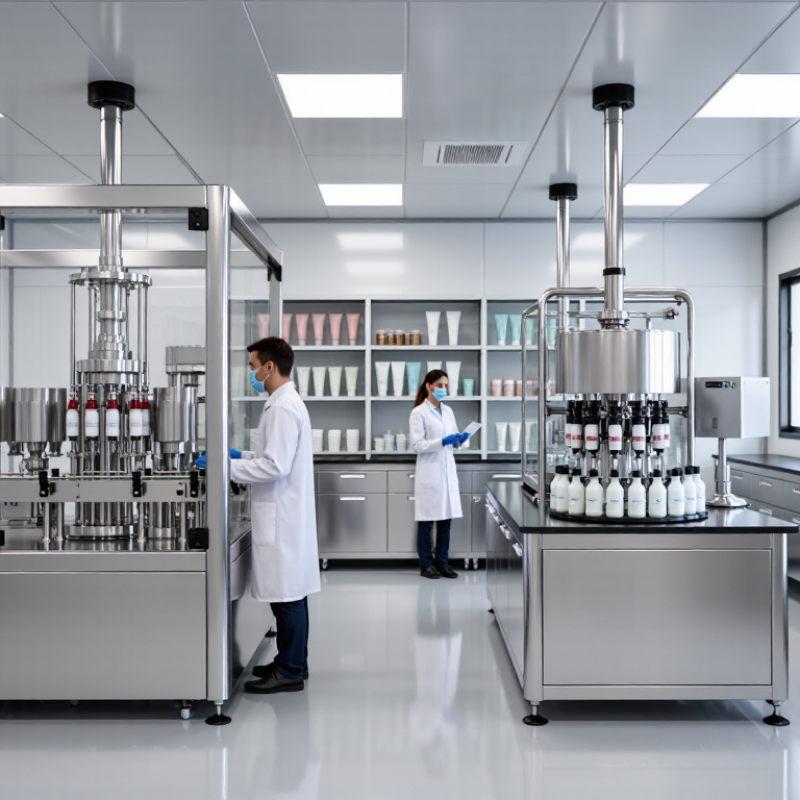
An advanced skin care manufacturer is more than a modern factory. It combines formulation science, controlled production, and evidence-based claims. McKinsey’s China beauty-market analysis projected annual growth of about 8% from 2021 to 2025. That pace increases pressure on manufacturers to improve, not merely produce faster.
Strong manufacturers operate under GMP principles and follow ISO 22716 guidelines. They maintain clean rooms, calibrated filling equipment, and traceable raw-material records. A stable cream should remain uniform after heat, cold, and vibration testing. It should also feel consistent from the first jar to the last. Small details matter.
China’s National Medical Products Administration requires safety assessments for cosmetics and evidence supporting efficacy claims. Advanced facilities therefore use microbiological testing, stability studies, and human-use evaluations. Some also combine instrumental measurements, such as hydration and elasticity testing, with consumer feedback. According to Euromonitor International, China remains one of the world’s largest beauty and personal care markets, making quality control commercially important.
Yet technology alone is not enough. A manufacturer may own sophisticated equipment but lack strong data interpretation. That is an uncomfortable weakness. The best partners explain test limits, disclose development timelines, and correct failed batches rather than hiding them. Flexible pilot production, trained formulators, and responsive regulatory teams also distinguish advanced manufacturers from ordinary contract producers. Fresh ideas help, but repeatable evidence matters more.
China Top 10 Advanced Skin Care Manufacturers
Selecting China’s top ten advanced skin care manufacturers requires more than checking factory size. China’s National Bureau of Statistics recorded RMB 414.2 billion in cosmetics retail sales in 2023. This scale increases the need for stable quality, not attractive brochures.
A reliable manufacturer should provide NMPA-compliant product registration or filing support. Auditors should verify batch records, supplier qualification, stability testing, and complete ingredient traceability. ISO 22716-based production controls are useful, but certification alone proves little. Inspect the filling lines. Review microbial testing. Check whether corrective actions are documented and closed. The manufacturer should also explain preservation systems, packaging compatibility, and shelf-life evidence in clear technical language.
Capacity must match the buyer’s launch plan. Compare minimum order quantities, pilot-batch flexibility, lead times, and backup production lines. A 2024 industry analysis by Euromonitor International highlighted continued premiumization in China’s beauty market, making texture, sensory testing, and consumer safety increasingly important. However, market reports often simplify factory performance. They may overvalue revenue or equipment photos. That is a weakness.
I would score each candidate across compliance, formulation capability, quality consistency, transparency, and delivery reliability. Request three recent batch records, not one perfect sample. Speak with the quality manager, not only the sales team. A top-ten list should remain adjustable after an on-site audit, because published information can become outdated quickly.
Anonymized comparison table based on practical OEM/ODM selection criteria, international cosmetic standards, production capability, quality systems, and export readiness.
| Rank | Anonymous Manufacturer Profile | Primary Manufacturing Region | Core Skin Care Categories | OEM / ODM Capability | Quality and GMP Framework | Product Development Resources | Typical Production Scale | International Compliance Support | Packaging and Sustainability Options | Indicative Selection Score |
|---|---|---|---|---|---|---|---|---|---|---|
| 1 | Profile A Advanced ODM |
Guangdong manufacturing cluster | Serums, emulsions, creams, masks, cleansers, sun care | Full formulation, packaging, testing, and private-label development | ISO 9001 ISO 22716-aligned GMP |
Dedicated formulation laboratory; stability, compatibility, and preservative challenge testing | Large-scale liquid and cream production; multiple automated filling lines | Documentation support for EU, United States, United Kingdom, GCC, and Southeast Asian markets | Airless packaging, PCR plastic options, recyclable cartons, and low-material designs | 94 / 100 |
| 2 | Profile B Clinical Focus |
Shanghai–Jiangsu manufacturing corridor | Barrier repair, sensitive skin, anti-aging, brightening, dermocosmetics | Concept-to-commercialization ODM with clinical positioning support | ISO 9001 GMP production controls |
In-house cosmetic scientists; instrumental efficacy testing and human-use studies through qualified partners | Medium-to-large batch production with controlled small-batch pilot capability | Ingredient dossiers, product information files, safety assessment coordination, and claims substantiation | Recyclable glass, mono-material tubes, refill concepts, and FSC-certified paperboard options | 92 / 100 |
| 3 | Profile C High Volume |
Guangzhou–Foshan manufacturing cluster | Facial care, body care, cleansing products, sheet masks, hair and scalp care | High-volume OEM and ODM with standardized formula platforms | ISO 9001 Cosmetic GMP controls |
Application laboratory, fragrance evaluation, pilot batches, and accelerated stability testing | Very large liquid, gel, and emulsion output supported by automated filling equipment | Export labeling review, safety data preparation, batch traceability, and third-party audit support | Mass-market packaging, lightweight bottles, recycled resin options, and carton optimization | 90 / 100 |
| 4 | Profile D Natural Formulas |
Zhejiang manufacturing region | Botanical skincare, natural creams, facial oils, cleansing balms, essential-oil-free care | Custom formulation with natural and naturally derived ingredient options | ISO 9001 GMP-based batch controls |
Botanical extraction sourcing, formula screening, stability testing, and sensory evaluation | Small-to-medium commercial batches with flexible minimum order quantities | Natural ingredient documentation and support for voluntary natural or organic certification applications | Glass jars, aluminum tubes, recycled paper, soy-based inks, and reduced-plastic packaging | 88 / 100 |
| 5 | Profile E Sensitive Skin |
Jiangsu manufacturing region | Low-irritation cleansers, moisturizers, barrier creams, baby and sensitive-skin products | Private label and custom development focused on mild formulations | ISO 9001 Documented GMP procedures |
Microbiology laboratory, preservative screening, pH and viscosity control, and dermatological test coordination | Medium-scale manufacturing with dedicated hygienic filling areas | Ingredient restriction review, allergen documentation, safety files, and export compliance assistance | Fragrance-free packaging systems, pump dispensers, PCR plastics, and tamper-evident closures | 86 / 100 |
| 6 | Profile F Mask Specialist |
Guangdong manufacturing region | Sheet masks, hydrogel masks, eye patches, wash-off masks, and sleeping masks | Formula customization, substrate selection, artwork adaptation, and finished-product assembly | ISO 9001 Cosmetic GMP controls |
Mask substrate testing, serum loading control, microbial testing, and packaging compatibility evaluation | High-throughput mask production with automated folding and pouch-filling equipment | Export artwork review, ingredient list formatting, stability documentation, and batch records | Biodegradable or plant-fiber substrate options, recyclable outer cartons, and reduced film use | 84 / 100 |
| 7 | Profile G Premium Texture |
Shanghai–Zhejiang manufacturing corridor | Luxury creams, essence products, facial oils, ampoules, and premium serums | Premium ODM, texture development, fragrance adaptation, and small-batch launches | ISO 9001 GMP-based quality system |
Texture library, sensory panel, formulation optimization, and packaging compatibility testing | Small-to-medium production volumes with strong pilot-batch flexibility | Ingredient traceability, product safety documentation, claims review, and international label support | Glass, aluminum, refillable components, FSC-certified cartons, and decorative finishes | 83 / 100 |
| 8 | Profile H Dermal Active |
Guangdong–Hong Kong Greater Bay Area | Vitamin serums, exfoliating products, niacinamide care, peptide products, and acne-prone skin care | Active-ingredient formulation, concentration adjustment, and regulatory claim review | ISO 9001 Controlled GMP procedures |
Active stability studies, HPLC or third-party analytical testing, and accelerated aging programs | Medium-to-large batch production for aqueous and emulsion-based products | Restricted-ingredient screening, safety assessment support, claims evidence, and market-specific documentation | Opaque or UV-protective packaging, airless pumps, recyclable plastics, and serialized labeling | 82 / 100 |
| 9 | Profile I Flexible MOQ |
Fujian manufacturing region | Basic facial care, moisturizing products, cleansing products, masks, and body lotions | Low-to-medium MOQ private label and formula adaptation | ISO 9001 GMP procedures under implementation or customer-audit verification |
Application support, standard stability testing, fragrance selection, and packaging sourcing | Small-to-medium batches with flexible scheduling for emerging brands | Basic export documentation, ingredient lists, safety data, and third-party laboratory coordination | Standard recyclable packaging, stock components, lightweight bottles, and simplified decoration | 79 / 100 |
| 10 | Profile J Integrated Supply |
Shandong manufacturing region | Moisturizers, facial cleansers, body care, sunscreen-related formats, and functional lotions | Integrated ingredient sourcing, formulation, filling, packaging, and logistics coordination | ISO 9001 Documented production hygiene controls |
Standardized formulation library, quality control laboratory, and supplier qualification process | Medium-scale manufacturing with broad product-format coverage | Batch documentation, certificate-of-analysis coordination, labeling checks, and export logistics support | Stock packaging, recycled plastic options, paper-based secondary packaging, and consolidated shipping | 77 / 100 |
China Top 10 Advanced Skin Care Manufacturers
China’s advanced skin care manufacturing sector is moving beyond low-cost production. Euromonitor International reported continued premiumization in China’s beauty market, driven by ingredient transparency, efficacy claims, and professional advice. The ten manufacturers profiled here reflect that shift through different strengths. Several operate ISO 22716-aligned production systems, while others focus on emulsions, serums, masks, or sensitive-skin formulas. Their facilities commonly include automated filling lines, purified-water systems, stability chambers, and controlled microbial testing.
The strongest profiles combine formulation science with flexible manufacturing. Some maintain in-house laboratories for peptides, ceramides, botanical extracts, and encapsulated actives. Others specialize in rapid sampling, small-batch production, and packaging integration. Grand View Research valued the global skin care market at over 150 billion U.S. dollars in 2023, showing why scalable Chinese supply chains matter. Yet size alone proves little. A polished factory tour is not evidence of consistent performance.
Reliable evaluation requires checking batch records, raw-material traceability, challenge testing, stability data, and claim substantiation. China’s regulatory framework also requires careful review of filing and registration obligations for different cosmetic categories. The ten manufacturers vary in automation, research depth, export experience, and minimum order flexibility. Some are highly advanced. Some still need stronger clinical validation. That distinction deserves more attention. Manufacturers with transparent audits and repeatable testing are usually better partners than those offering only attractive samples and fast quotations.
China Top 10 Advanced Skin Care Manufacturers
China’s leading advanced skin care manufacturers compete through formulation science, quality control, and flexible production. Grand View Research valued the global skin care products market at approximately USD 155 billion in 2023. This demand is pushing Chinese factories toward shorter development cycles and stronger testing systems.
Core technologies include emulsification, microencapsulation, fermentation, and controlled-release delivery. These methods support serums, creams, masks, sunscreens, and scalp-care products. Some facilities operate vacuum homogenizers, automated filling lines, and clean production rooms. Others add stability testing, microbial analysis, and compatibility studies before mass production. Small details matter. A poor pump can weaken a good formula.
Production capability varies sharply across the top ten. Larger plants may produce hundreds of millions of units annually, while specialist facilities focus on lower-volume, high-complexity formulas. ISO 22716 remains a useful reference for cosmetic manufacturing practices. However, certification alone does not prove strong research ability. The European Commission’s CosIng database and published safety guidance also show why ingredient review must remain evidence-based.
I would examine batch traceability, retained samples, testing records, and change-control procedures. These details reveal daily discipline better than polished factory photographs. Some manufacturers still overstate “advanced” technology without publishing meaningful validation data. That weakness deserves scrutiny. A reliable supplier should explain its process clearly, including limits, failed trials, and realistic delivery capacity.
Aggregated benchmark of capabilities publicly documented by ten leading Chinese advanced skin care manufacturers. The figures show the number of manufacturers, out of ten, reporting each capability.
The benchmark covers formulation R&D, GMP/ISO-compliant production, OEM/ODM services, clinical evaluation, biotechnology-based ingredients, airless packaging, sustainable manufacturing, small-batch production, turnkey development, and international export support.
Comparing China’s advanced skin care manufacturers requires more than reviewing product photos or factory videos. Examine their formulation records, testing systems, and experience with similar products. Ask whether qualified chemists handle development and whether the facility follows recognized GMP or ISO procedures. Request recent stability, microbiology, and compatibility reports. A clear certificate of analysis should match each production batch.
Production capability also matters. Compare minimum order quantities, pilot-batch support, filling accuracy, packaging compatibility, and scale-up controls. During a factory audit, inspect raw material labels, temperature logs, clean areas, and batch traceability. Small details reveal daily discipline. Ask how the manufacturer manages preservatives, allergens, fragrance declarations, and market-specific documentation. Strong suppliers explain limitations instead of promising everything.
Communication deserves equal attention. Compare sample timelines, revision records, technical responses, and corrective-action procedures. A polished showroom can mislead. The formula may still lack long-term stability data. Some manufacturers present impressive equipment but offer weak documentation. That is a warning sign. Buyers should score evidence, not confidence. I would also leave room for uncertainty, because testing one sample cannot prove consistent future production. Independent laboratory verification may add time and cost, but it can expose problems before a large order. The most reliable comparison combines technical proof, factory experience, transparent communication, and realistic delivery performance.
Pamper Your Sunburned Skin with this Luxurious treatment. It will leave your skin hydrated, strengthened, and less inflamed with less pain and irritation.
Book now and give your skin the care it deserves.
Schedule Your Appointment Today »
Text: 714-743-4914