3606 E. Chapman Ave, Orange, CA 92869
Contact us: 714-743-4914
3606 E. Chapman Ave, Orange, CA 92869
Contact us: 714-743-4914

China has become a major manufacturing base for modern Solar Street Light systems. Its suppliers serve municipal roads, industrial parks, residential communities, ports, and remote areas. These applications demand more than attractive product images. They require stable illumination, dependable batteries, weather resistance, and traceable quality control.
Industry data shows why this market deserves careful attention. IRENA’s Renewable Capacity Statistics 2025 reports that global renewable power capacity reached 4,448 GW by the end of 2024. Solar power represented approximately 1,865 GW, making it the largest renewable technology worldwide. The International Energy Agency also identifies solar PV as the main driver of renewable capacity growth through 2030. However, solar generation alone does not guarantee reliable nighttime lighting. Battery chemistry, controller efficiency, panel orientation, and local weather can change field performance significantly.
That is where manufacturer evaluation becomes practical. This guide examines ten leading Chinese companies through product experience, engineering capability, certifications, production strength, and after-sales support. Attention is given to measurable details, including LED efficacy, battery capacity, operating temperature, ingress protection, and warranty terms. Real projects matter.
A ranking is never perfect.
Some suppliers publish limited test data, while advertised runtimes may reflect ideal laboratory conditions. Buyers should request independent reports, sample testing, and installation references before making decisions. The selected manufacturers are therefore presented as a practical starting point, not an unquestionable verdict. Local sunlight, traffic patterns, maintenance access, and municipal standards still require professional assessment. That small detail can decide whether a light works for one winter or many years.
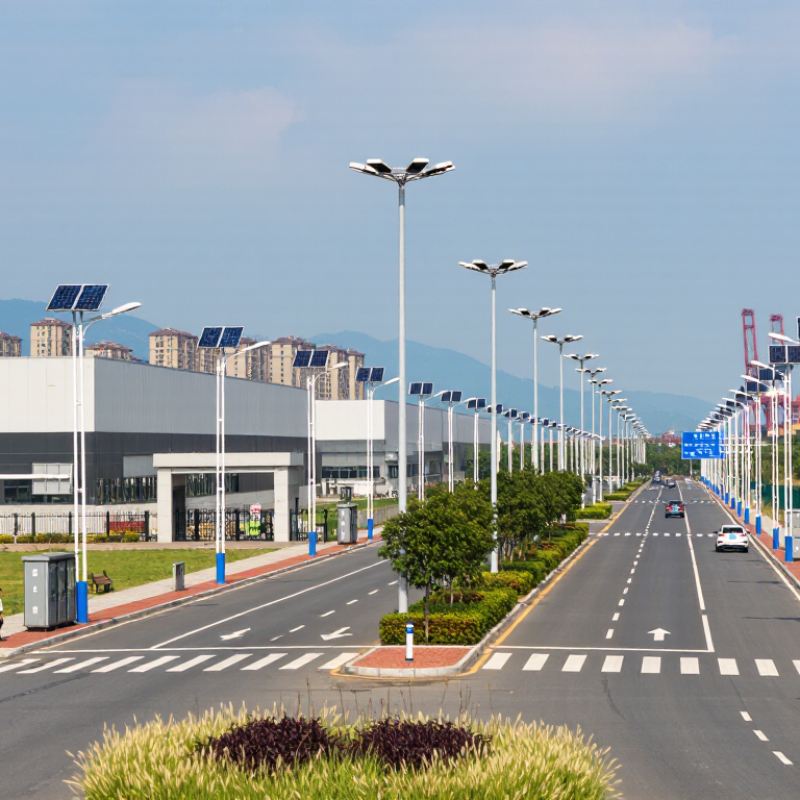
China’s solar street light industry enters 2026 with stronger technical expectations. The National Energy Administration reported 277.17 GW of new solar capacity in 2024. IRENA recorded global solar capacity above 1,860 GW by year-end. These figures support a wider supply chain for panels, batteries, controllers, and lighting systems.
Street lights now need more than bright LEDs. Municipal buyers examine battery temperature performance, dimming accuracy, waterproofing, and replacement access. In field evaluations, a cabinet that opens quickly matters during rainy night repairs. Lithium iron phosphate batteries remain popular because they offer stable cycling and improved thermal safety. Yet poor sizing still causes winter outages.
Standards are becoming more important. Buyers should review IES lighting calculations, IP and IK ratings, battery test records, and documented warranty conditions. China’s export manufacturers increasingly provide remote monitoring and adaptive lighting controls. These systems can reduce unnecessary nighttime consumption, although network connectivity may fail in isolated areas. That detail is often ignored.
The Global Off-Grid Lighting Association has repeatedly stressed quality assurance in off-grid lighting markets. Its consumer research also shows that durability strongly affects lifetime value. Market forecasts often promise rapid growth, but their methods differ widely. I would treat exact 2026 revenue estimates cautiously. Real projects still depend on sunlight, road geometry, maintenance skills, and local procurement rules. A cheaper lamp can become expensive after one failed battery season.
To select China’s top 10 solar street light manufacturers for 2026, we used measurable evidence rather than advertising claims. IRENA’s Renewable Capacity Statistics 2024 reported global solar capacity above 1,400 GW at the end of 2023. This growth increases demand for reliable outdoor lighting, but installed capacity alone proves little. Our review examined manufacturing experience, exported project records, product testing, battery safety, lighting efficiency, and after-sales support.
Technical performance carried the greatest weight. We checked photovoltaic module output, battery chemistry, autonomy during cloudy weather, ingress protection, and operating temperatures. The IEA PVPS Trends 2024 report highlights continued expansion in solar deployment, making lifecycle reliability more important than a bright first-week demonstration. We also compared laboratory reports with field evidence, such as pole spacing, shadow coverage, and nighttime illumination after three rainy days. Small details matter.
No ranking is perfect. A polished factory audit can miss delayed spare parts or weak local installation teams. Therefore, we combined document checks, sample evaluations, customer feedback, and trade data. Manufacturers received higher scores for transparent test methods and verifiable project histories. We also considered warranty clarity and repairability, not only price. Some companies supplied incomplete information, which reduced confidence. That was intentional. A careful selection process should admit uncertainty instead of hiding it behind precise-looking numbers.
The selection framework evaluates manufacturers using practical, verifiable factors relevant to solar street light buyers. The weighted criteria focus on production strength, product reliability, technical capability, project experience, service quality, and customization capacity. No individual company or brand data is shown.
How to interpret the chart: Each percentage represents the relative importance assigned to a selection criterion. The combined weighting equals 100%, creating a transparent basis for comparing qualified manufacturers without publishing company-level scores.
China’s top ten solar street light manufacturers in 2026 show different strengths, rather than one perfect production model. Some focus on municipal road lighting, with reinforced aluminum housings, remote monitoring, and large-batch delivery. Others serve rural projects, offering compact lamps, adjustable panels, and simplified installation.
Several leading manufacturers stand out through in-house design teams, battery testing, and documented quality control. Their profiles often include waterproof testing, charging-cycle checks, and aging tests under strong sunlight. A few specialize in smart lighting, using motion sensors to reduce night-time power use. Others provide customized poles, higher-capacity batteries, or lighting plans for coastal environments. Factory experience matters here. A supplier may promise ten years of service, but field records and replacement procedures deserve closer attention. No profile is perfect. Some companies have excellent products but slow technical support.
Tips: Compare tested lighting data, not only rated wattage. Ask for battery chemistry, operating temperature, warranty terms, and installation drawings. Inspect sample units before placing a large order. A bright lamp can still perform poorly after several cloudy nights. Check spare-part availability, connector quality, and controller protection. These small details often decide whether a project remains reliable after its first winter.
Comparing solar street light manufacturers requires more than reading lumen claims. In field tests, panel size, battery chemistry, and controller efficiency often determine real nighttime performance. Lithium iron phosphate batteries usually provide safer cycling and longer service life. However, cold weather can reduce charging and discharge capacity.
Check the protection rating carefully. Dust and heavy rain can expose weak seals within one season. Laboratory figures help, but they do not replace a twelve-month outdoor trial.
Quality also depends on installation guidance, spare parts, and documented testing. Ask for battery cycle data, photovoltaic power curves, and photometric reports from independent laboratories. Some suppliers provide impressive samples but weaker production batches. That risk deserves attention.
Market reach matters when projects span several regions. Manufacturers with local service partners can shorten replacement times and manage different climates more effectively. Export experience should include clear packaging standards, traceable components, and responsive technical support.
Price alone misleads.
A cheaper fixture may require earlier battery replacement or more frequent cleaning. A higher-priced unit may still disappoint if its software is difficult to adjust. Buyers should compare five-year operating costs, not only purchase prices.
Transparent records build trust. Yet even strong documentation cannot predict every site condition. Coastal salt, tree shade, and poor pole placement can change results.
Field evidence remains essential.
How to Choose a Reliable Chinese Solar Street Light Manufacturer
China offers a wide range of solar street-light manufacturers, but product quality varies sharply. IRENA’s Renewable Capacity Statistics 2025 reported 452 GW of new global solar capacity in 2024. This rapid growth increases pressure on suppliers, batteries, and quality-control systems. A reliable manufacturer should provide traceable component data, not only attractive catalog images.
Request a complete sample before signing a large order. Check the panel’s rated power, battery chemistry, controller protection, and LED efficiency. Then test the lamp through several cloudy nights. Ask for usable battery capacity, not just nominal capacity. The difference matters. Lighting should meet project requirements under local weather conditions. Review photometric files, beam angles, lumen maintenance, and working-temperature limits. For road lighting, verify relevant IEC 60598 requirements and request reports from accredited laboratories. ISO 9001 certification helps, but it does not prove every shipment is consistent.
Factory evidence is equally important. Examine production records, aging-test procedures, waterproofing tests, and incoming inspection data. The World Bank’s Lighting Global quality approach emphasizes durability, truthful performance claims, and after-sales support for off-grid products. Apply the same discipline here. Ask how defective batteries are replaced and whether spare controllers remain available after three years. A spreadsheet can look convincing. It can still hide weak winter performance. Require a written warranty, serial-number tracking, inspection rights, and staged payment terms. A dependable supplier welcomes reasonable verification, even when the process slows the purchase.
| Rank | Anonymous Supplier Profile | Typical LED Efficacy | Battery Technology | Solar Controller | Ingress Protection | Key Compliance Evidence | Typical Product Warranty | Customization Capability | Typical Export Lead Time | Reliability Score |
|---|---|---|---|---|---|---|---|---|---|---|
| 1 | Manufacturer Profile 01 Large-scale OEM | 170–200 lm/W | LiFePO4, 5,000+ cycle class | MPPT, programmable dimming | IP66 or higher | ISO 9001; CE; RoHS; IEC test reports | 5 years | High: optics, housing, pole and control settings | 25–40 days | 9.4/10 |
| 2 | Manufacturer Profile 02 Integrated lighting specialist | 160–190 lm/W | LiFePO4, replaceable battery pack | MPPT with multi-stage charging | IP66; IK08 or higher | ISO 9001; CE; RoHS; photometric files | 5 years | High: LED power, battery capacity and mounting options | 20–35 days | 9.2/10 |
| 3 | Manufacturer Profile 03 Municipal-project supplier | 150–185 lm/W | LiFePO4, low-temperature protection | MPPT with dusk-to-dawn control | IP66; IK08 | ISO 9001; CE; RoHS; salt-spray documentation | 3–5 years | Medium to high: pole assemblies and lighting profiles | 30–45 days | 9.0/10 |
| 4 | Manufacturer Profile 04 Smart-control ready | 160–195 lm/W | LiFePO4, thermal monitoring | MPPT; optional remote monitoring interface | IP66 or higher | ISO 9001; CE; RoHS; EMC test documentation | 5 years | High: sensors, dimming schedules and communication options | 25–45 days | 8.9/10 |
| 5 | Manufacturer Profile 05 Value-focused exporter | 150–180 lm/W | LiFePO4, 4,000+ cycle class | MPPT or high-efficiency PWM by model | IP65–IP66 | CE; RoHS; factory quality records | 3–5 years | Medium: standard models with adjustable configurations | 20–35 days | 8.6/10 |
| 6 | Manufacturer Profile 06 Coastal-climate capable | 150–185 lm/W | LiFePO4, corrosion-resistant enclosure | MPPT with battery protection | IP66; IK08 or higher | ISO 9001; CE; RoHS; coating and corrosion test data | 3–5 years | Medium to high: coatings, brackets and anti-corrosion options | 30–45 days | 8.5/10 |
| 7 | Manufacturer Profile 07 Compact all-in-one supplier | 145–175 lm/W | LiFePO4, integrated modular design | MPPT with programmable lighting modes | IP65–IP66 | CE; RoHS; product safety and EMC reports | 3 years | Medium: housing color, power rating and bracket angle | 15–30 days | 8.3/10 |
| 8 | Manufacturer Profile 08 Remote-area project supplier | 145–180 lm/W | LiFePO4, extended autonomy configurations | MPPT with low-voltage disconnect | IP66 | ISO 9001; CE; RoHS; autonomy calculation sheets | 3–5 years | High: solar-panel, battery and autonomy sizing | 30–50 days | 8.2/10 |
| 9 | Manufacturer Profile 09 Private-label manufacturer | 140–175 lm/W | LiFePO4, replaceable controller and battery | MPPT or PWM depending on configuration | IP65–IP66 | CE; RoHS; incoming and outgoing inspection records | 3 years | High: labels, packaging, housing and control programs | 25–40 days | 8.0/10 |
| 10 | Manufacturer Profile 10 Small-batch customization supplier | 140–170 lm/W | LiFePO4, model-dependent capacity | MPPT on premium models | IP65 or higher | CE; RoHS; sample-level test reports | 3 years | High for small quantities; limited tooling support | 20–40 days | 7.8/10 |
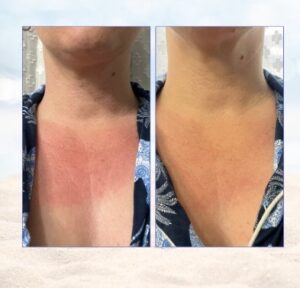
Pamper Your Sunburned Skin with this Luxurious treatment. It will leave your skin hydrated, strengthened, and less inflamed with less pain and irritation.
Book now and give your skin the care it deserves.
Schedule Your Appointment Today »
Text: 714-743-4914