3606 E. Chapman Ave, Orange, CA 92869
Contact us: 714-743-4914
3606 E. Chapman Ave, Orange, CA 92869
Contact us: 714-743-4914

Global buyers are paying closer attention to GLP-2 Analogues as short bowel syndrome remains a complex nutrition-support challenge. These medicines do not replace clinical judgment. They are specialist therapies requiring approved indications, trained prescribers, and monitored distribution.
The leading established option is teduglutide, marketed as Gattex in the United States and Revestive in the European Union. The U.S. Food and Drug Administration and European Medicines Agency recognize its role in reducing parenteral support for eligible patients with short bowel syndrome. Clinical value is measurable through lower infusion requirements, improved intestinal adaptation, and careful monitoring of fluid balance. The FDA prescribing information also highlights important risks, including neoplastic growth, biliary complications, and intestinal obstruction.
The market is broader than one approved product. Apraglutide and other long-acting candidates have attracted attention through clinical development programs and trial registries, including ClinicalTrials.gov. Their commercial position may change as Phase 3 evidence and regulatory decisions develop. That uncertainty matters. Buyers should not treat promising data as approval.
IQVIA’s Global Use of Medicines reports show why specialty medicines require disciplined forecasting, since access depends on reimbursement, cold-chain capacity, and hospital protocols. GlobalData and Evaluate Pharma analyses similarly emphasize pipeline maturity rather than publicity alone. Prices can vary sharply between markets. So can supply reliability.
This guide compares clinical evidence, regulatory status, administration, manufacturing quality, and regional availability. It also considers a practical issue: the “top” analogue is not always the newest candidate. For global procurement teams, the safest choice is the product supported by strong evidence, lawful authorization, verified serialization, and dependable pharmacovigilance. That sounds cautious. It is necessary.
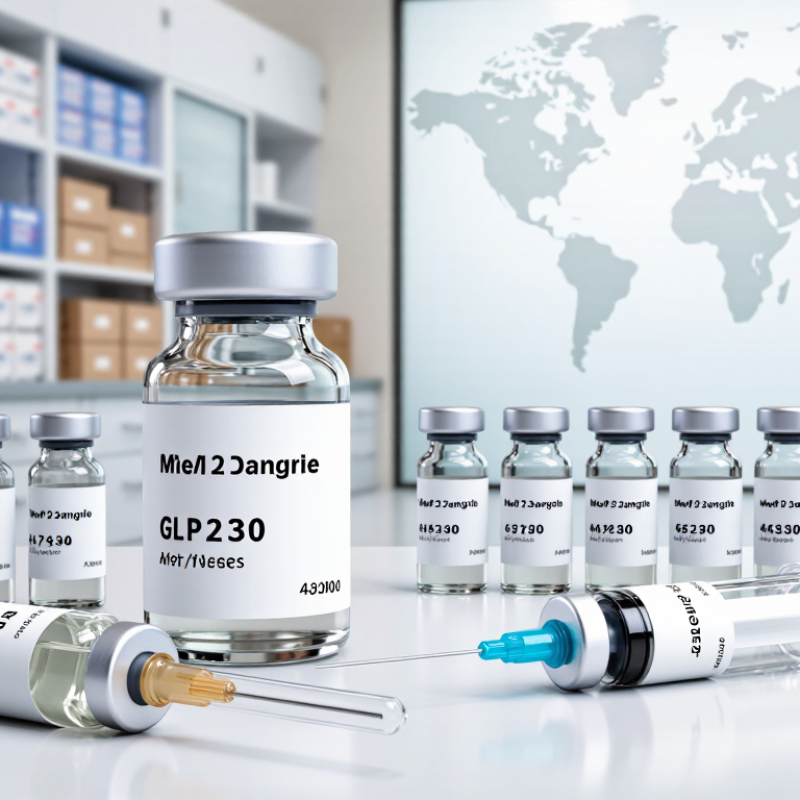
GLP-2 analogues are medicines designed to imitate glucagon-like peptide-2, a hormone produced in the intestine. They mainly support intestinal growth, mucosal repair, and nutrient absorption. The best-known approved analogue is teduglutide, although approval status differs between countries. Its clinical role is most relevant to adults with short bowel syndrome who need nutritional or fluid support.
These medicines do not work like ordinary digestive supplements. They require specialist assessment, because treatment may influence intestinal tissue, fluid balance, and gastrointestinal symptoms. Clinicians usually review nutrition needs, bowel anatomy, kidney function, and the risk of complications. Monitoring can include weight, hydration, abdominal symptoms, and laboratory results.
Evidence matters more than popularity.
For global buyers, a “top” analogue should have clear regulatory documentation, stable manufacturing, validated storage conditions, and reliable pharmacovigilance procedures. Temperature-sensitive transport may affect product quality, especially across long routes.
Buyers should also confirm local prescribing rules and the availability of trained clinical supervision. A lower price does not prove better value. It may reflect weaker support, limited evidence, or hidden logistics costs. Some long-acting analogues remain under investigation, so their clinical role is not yet settled. I would avoid treating early trial results as established care. The field is promising, but careful interpretation remains necessary.
What Are the Top GLP-2 Analogues for Global Buyers?
Comparing leading GLP-2 analogues requires more than listing development-stage products. These medicines are mainly studied for short bowel syndrome with intestinal failure, where patients may need long-term parenteral nutrition or fluids. Their practical value depends on intestinal anatomy, remaining bowel function, and specialist monitoring.
Teduglutide is the most established option in several regulated markets. It supports intestinal adaptation and may reduce dependence on parenteral support. However, clinicians must monitor fluid balance, abdominal symptoms, biliary complications, and possible intestinal growth. Dosing schedules and approved uses can differ between countries. That detail matters for international procurement.
Other long-acting GLP-2 analogues, including apraglutide and glepaglutide, have been investigated for similar needs. Their extended activity may offer fewer injections, but evidence and regulatory status remain uneven. Some data are still developing. A simple ranking can mislead.
For global buyers, product selection should include approval status, clinical evidence, cold-chain requirements, shelf life, pharmacovigilance support, and authorized distribution. Procurement teams should request current regulatory documents and independent quality records. Price alone is a weak guide. A lower purchase cost may bring higher monitoring or supply risks. Local specialists should confirm suitability before any clinical use, because patient response can vary considerably.
For global buyers, “top” GLP-2 analogue means more than the strongest trial result. Clinical value depends on indication, formulation, supply continuity, and local approval. These medicines may improve intestinal absorption and reduce parenteral nutrition needs in selected adults with short bowel syndrome. Benefits usually develop gradually, not overnight. Evidence is stronger for established intestinal failure than for general digestive complaints. A product with limited comparative data should not be treated as equivalent to a well-studied therapy. That distinction is easy to miss.
Safety assessment should include intestinal obstruction, fluid retention, gallbladder disease, pancreatic symptoms, and possible abnormal tissue growth. Patients may need baseline investigations and scheduled follow-up. Clinicians often monitor stool output, hydration, body weight, kidney function, and catheter dependence. Suitability changes with cancer history, active gastrointestinal disease, age, pregnancy status, and other medicines. A patient with unstable fluid balance may require closer observation. Real-world responses can be uneven. That uncertainty deserves honest discussion.
Tips: Compare published evidence, approved indications, storage requirements, and pharmacovigilance systems before procurement. Confirm local regulatory status and use licensed medical suppliers. Ask whether the care team can manage dose adjustments and urgent adverse events. Avoid judging value by price alone. The cheapest option may create hidden monitoring costs. A careful decision is usually patient-specific, not purely market-driven.
| GLP-2 Analogue | Regulatory / Development Status | Primary Clinical Use | Administration Profile | Evidence of Efficacy | Key Safety Considerations | Best-Fit Patient Profile | Procurement / Suitability View |
|---|---|---|---|---|---|---|---|
| Teduglutide | Licensed in several major jurisdictions, including the United States and European Union, for selected patients with short bowel syndrome-associated intestinal failure. Age limits and labeling requirements vary by jurisdiction. | Reduction of dependence on parenteral support in adults and eligible pediatric patients with short bowel syndrome-associated intestinal failure. | Subcutaneous injection once daily. The commonly referenced adult dose is 0.05 mg/kg/day; pediatric dosing and preparation requirements are weight-based and label-dependent. | Randomized controlled studies demonstrated clinically meaningful reductions in parenteral-support volume and infusion days in a proportion of patients. Some patients achieved complete independence, although response varies with bowel anatomy, colon continuity, enteral intake, and baseline intestinal adaptation. | Requires monitoring for fluid overload, gastrointestinal obstruction, biliary or pancreatic complications, and possible acceleration of abnormal tissue growth. Colonoscopic surveillance and routine laboratory monitoring are recommended according to local labeling. | Clinically stable adults or eligible children with chronic short bowel syndrome who remain dependent on parenteral nutrition or intravenous fluids despite optimized dietary and medical management. | The most established option for global medical procurement because it has the broadest regulatory experience and the largest body of controlled clinical evidence. Requires cold-chain handling, trained administration, and specialist follow-up. |
| Glepaglutide | Investigational GLP-2 analogue. It should not be treated as an approved substitute for licensed therapy unless authorization has been granted by the relevant national regulator. | Development has focused on reducing parenteral-support requirements in adults with short bowel syndrome-associated intestinal failure. | Studied as a subcutaneous therapy, including repeated-dose regimens. Final dosing, formulation, and administration instructions depend on the development program and regulatory outcome. | Clinical studies have reported reductions in parenteral-support needs in selected adults. Results should not be compared directly with teduglutide because trial designs, baseline anatomy, treatment duration, and response definitions differ. | Expected class-related risks include fluid retention, gastrointestinal effects, biliary or pancreatic events, and concern about abnormal tissue growth. Long-term safety and real-world pharmacovigilance remain less established than for approved therapy. | Potentially relevant for adults enrolled in a regulated clinical trial or managed under an authorized expanded-access pathway, subject to strict eligibility and specialist oversight. | Not suitable for routine commercial purchasing where a licensed product is required. Buyers should verify regulatory status, import permissions, clinical-trial authorization, product quality documentation, and temperature-control requirements. |
| Apraglutide | Investigational long-acting GLP-2 analogue; not established as a broadly licensed treatment for short bowel syndrome-associated intestinal failure in major global markets. | Studied primarily for intestinal failure associated with short bowel syndrome, with research also evaluating other gastrointestinal and intestinal-rehabilitation applications. | Designed for less frequent subcutaneous administration than daily GLP-2 treatment in clinical studies. Exact schedule and dose remain dependent on the final approved formulation, if authorization is obtained. | Early and mid-stage studies have indicated potential reductions in parenteral-support volume and infusion burden. Evidence remains insufficient for definitive ranking against approved treatment or for routine standard-of-care use. | Monitoring considerations are expected to include fluid balance, gastrointestinal symptoms, biliary and pancreatic function, and neoplastic-risk surveillance. The depth of long-term safety data is currently more limited than for established therapy. | Possible future option for carefully selected adults who may benefit from less frequent dosing, provided efficacy and safety are confirmed in adequately powered trials. | Attractive from a potential adherence and logistics perspective, but currently unsuitable for standard institutional procurement without an authorized clinical-development or special-access pathway. |
| Other investigational GLP-2 or GLP-2-based candidates | Various early-stage molecules and modified peptides have been evaluated in preclinical or clinical research. Most do not yet have sufficient regulatory or comparative evidence for procurement decisions. | Potential applications include intestinal adaptation, gastrointestinal mucosal repair, and reduction of parenteral-support dependence. | Routes and dosing intervals vary across programs; many remain experimental and lack validated commercial presentation, stability data, or standardized administration instructions. | Evidence is generally limited to laboratory, animal, early-phase, or small uncontrolled studies. Efficacy claims should not be considered clinically interchangeable with data from licensed therapy. | Safety profiles are incompletely characterized. Particular attention should be paid to immunogenicity, fluid retention, gastrointestinal obstruction, abnormal tissue growth, and product-related impurities. | Restricted to approved research settings with institutional review, informed consent, qualified clinical investigators, and documented medical monitoring. | Not recommended for routine purchasing. Buyers should require regulatory documentation, validated manufacturing controls, certificate-of-analysis review, stability data, traceability, and verified cold-chain capability. |
Global buyers should distinguish approved access from clinical promise. Teduglutide remains the leading commercially available GLP-2 analogue for short bowel syndrome with intestinal failure. FDA prescribing information reports that 63% of treated patients achieved a clinically meaningful reduction in parenteral support at 24 weeks. EMA assessment materials describe similar evidence, but national reimbursement rules still vary considerably.
Investigational availability Apraglutide and glepaglutide remain investigational in major public regulatory databases, including FDA Drugs@FDA and the EMA medicine register. Their availability is therefore limited to clinical studies or controlled development programmes. ClinicalTrials.gov records show active evaluation in intestinal failure populations, although trial status can change quickly. That matters for procurement planning.
Regulatory status is uneven. Very uneven. A product may hold approval in one jurisdiction, while import, reimbursement, or hospital use remains unavailable elsewhere. IQVIA’s Global Use of Medicines reporting also highlights substantial differences in medicine access and spending between high-income and emerging markets. Buyers should verify the local product licence, cold-chain requirements, pharmacovigilance duties, and tender rules before ordering. Public data are useful, but not perfect. Trial populations are often small, and regional supply information may lag behind regulatory decisions. That is an uncomfortable limitation.
What Are the Top GLP-2 Analogues for Global Buyers?
Choosing a reliable GLP-2 analogue supplier requires more than comparing prices. Buyers should verify manufacturing authorization, quality systems, and product status in each target market. A credible supplier can provide current certificates, batch records, analytical methods, and clear storage conditions. These details should match the product label and regulatory documents. If they do not, pause the purchase.
Experience shows that cold-chain performance can decide product quality. Ask how shipments are monitored from dispatch to delivery. Temperature logs, tamper-evident packaging, and defined excursion procedures matter. Suppliers should also explain batch traceability and complaint handling. Independent testing may strengthen confidence, although it adds time and expense. That trade-off is often worthwhile. I would not rely on polished websites alone.
Tips: Request a recent certificate of analysis, not a generic template. Check the issuing laboratory and test dates. Confirm whether the analogue is approved, investigational, or restricted in your jurisdiction. Use licensed medical or pharmaceutical channels only. Avoid suppliers promising guaranteed treatment results or unusually fast delivery. Communication quality is evidence, but not proof. Even experienced buyers can miss small inconsistencies. Keep written records of every document, question, and shipment decision.
Approximate plasma half-life of selected GLP-2 analogues, with development status shown for buyer-oriented comparison.
Teduglutide is an approved GLP-2 analogue with an approximate plasma half-life of 2 hours. Apraglutide and glepaglutide are longer-acting investigational candidates, with reported approximate half-lives of 72 hours and 50 hours respectively. Regulatory status, product quality, cold-chain capability, documentation, and local import requirements should be verified before selecting an international supplier.
Pamper Your Sunburned Skin with this Luxurious treatment. It will leave your skin hydrated, strengthened, and less inflamed with less pain and irritation.
Book now and give your skin the care it deserves.
Schedule Your Appointment Today »
Text: 714-743-4914