10 Best Industrial Personal Computer Manufacturers Worldwide

Industrial Personal Computer demand is rising as factories connect machines, sensors, and real-time analytics. According to MarketsandMarkets, the industrial PC market is projected to grow from approximately USD 5.8 billion in 2023 to USD 8.4 billion by 2028. The report attributes this growth to automation, edge computing, and Industry 4.0 investment. Grand View Research also identifies manufacturing, energy, and transportation as important application sectors.

This guide introduces 10 leading Industrial Personal Computer manufacturers worldwide. It examines more than brand visibility. The evaluation considers processor availability, fanless cooling, operating temperature, enclosure protection, expansion options, certifications, and long-term technical support. A factory floor may expose equipment to vibration, dust, oil mist, and unstable temperatures. These details can decide whether a system survives or fails.

Reliability matters most.

Data from the International Federation of Robotics shows continued global investment in industrial automation. That trend increases demand for computers capable of processing data near production equipment. However, market reports use different definitions of “industrial PC.” Some include panel PCs and rugged edge devices, while others focus on embedded systems. This makes direct comparisons imperfect.

No ranking is perfect. Buyer requirements differ between a food-processing line, a warehouse, and a power facility. Therefore, this overview combines published market research with practical selection factors. It aims to help engineers, system integrators, and procurement teams compare manufacturers more carefully. Product specifications should still be verified with each supplier before purchase.
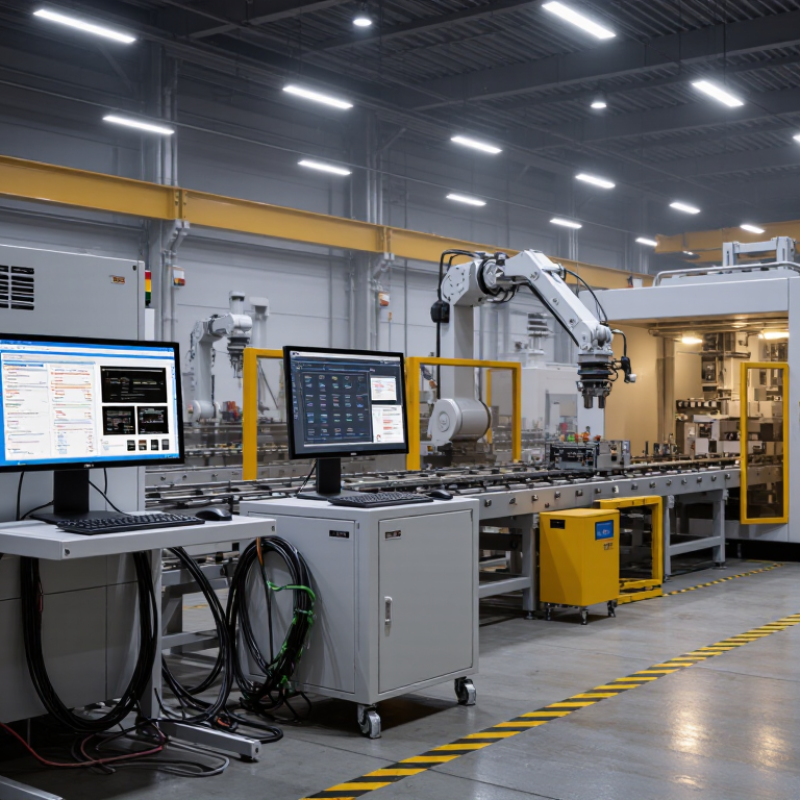
10 Best Industrial Personal Computer Manufacturers Worldwide

Industry Standards for Industrial Personal Computer Manufacturers

Industrial personal computer manufacturers are judged by more than processing speed. Industry standards reveal how well their systems survive heat, dust, vibration, and electrical noise. A reliable manufacturer should design against recognized IEC environmental and electromagnetic compatibility requirements. Published test methods matter more than attractive product language.

Look for operating temperatures supported by measured data, not vague claims. A factory floor can expose a computer to oil mist, metal dust, and sudden temperature changes. Enclosures should offer an appropriate IP rating and practical cable protection. Shock and vibration testing should reflect real installation conditions, including wall mounts and DIN rails. Small details matter.

Security is also an industry standard. Trusted boot features, hardware-based encryption, controlled firmware updates, and long-term patch support reduce operational risk. Manufacturers should provide traceable component records and clear lifecycle policies. They should explain replacement procedures before a failure occurs. This is where many evaluations become uncomfortable. Some suppliers publish impressive MTBF figures but provide little test context. That weakness deserves scrutiny.

Field experience remains valuable. Engineers should inspect thermal behavior during continuous workloads and verify ports after repeated connection cycles. Independent certifications add authority, but they do not replace site testing. Documentation must be accurate, current, and easy for maintenance teams to use. A dependable manufacturer admits limitations, records test conditions, and corrects design issues openly. Perfection is unlikely. Honest evidence is essential.


Criteria for Evaluating Global Industrial PC Manufacturers

Evaluating global industrial PC manufacturers requires more than comparing processor speed or memory. Examine proven experience in harsh environments: factories, control rooms, outdoor cabinets, and transport systems. Ask for test evidence covering heat, humidity, vibration, dust, and electromagnetic interference. A reliable supplier should explain test methods, operating limits, and failure rates clearly. Marketing language alone is weak evidence.

Hardware design reveals professional knowledge. Check fanless cooling, thermal margins, storage protection, expansion options, and enclosure materials. Confirm compatibility with required operating systems, fieldbus interfaces, and long-term software support. Review certifications for electrical safety, electromagnetic compatibility, and regional market access. Small details matter. For example, a replaceable storage module can reduce downtime during a night shift.

Reliability also depends on the manufacturer’s service structure. Assess warranty terms, repair locations, spare-part availability, firmware controls, and response times across different regions. Request references from comparable installations, not only laboratory demonstrations. Cybersecurity practices deserve equal attention, including secure boot, vulnerability updates, access control, and documented change management. No supplier scores perfectly. I would record weaknesses openly, especially vague lifecycle promises or limited repair data. A cheaper unit may become expensive after repeated shutdowns, while an impressive specification may fail under constant heat. Independent audits and customer interviews can expose that gap.

10 Best Industrial Personal Computer Manufacturers Worldwide - Criteria for Evaluating Global Industrial PC Manufacturers

Reference evaluation framework for comparing industrial PC manufacturers. The percentages represent procurement priorities rather than company or brand performance data.

How to use this chart: Reliability and lifecycle support receive the highest weighting because industrial computers are commonly deployed for continuous operation and long replacement cycles. Environmental durability should be checked against applicable requirements such as IEC 60068 testing and IEC 60529 ingress protection, while electromagnetic compatibility should be assessed against relevant industrial immunity standards such as IEC 61000-6-2.

Ten Leading Industrial Personal Computer Manufacturers Worldwide

Ten leading industrial personal computer manufacturers worldwide are shaping automation, transport, energy, and factory control systems. Their products often use fanless aluminum housings, wide-temperature components, and shock-resistant storage. These details matter beside a stamping press or inside a dusty control cabinet. Leading suppliers typically offer DIN-rail computers, panel PCs, box PCs, and rack systems. They also support serial ports, dual Ethernet, digital inputs, and display connections. Those interfaces remain essential in older facilities.

Manufacturers from North America, Europe, and Asia compete through reliability, customization, and long product lifecycles. Some provide systems rated for operation between -20°C and 60°C. Others focus on compact computers for vehicles, kiosks, or machine vision. Experienced buyers should inspect processor availability, BIOS control, repair procedures, and replacement timing. A five-year supply commitment can reduce costly redesigns. Certifications for industrial environments also deserve careful verification. Marketing language is not evidence.

No ranking is perfect. A supplier may excel in rugged hardware but respond slowly to engineering questions. Another may offer excellent support but limited expansion options. Field testing should include vibration, heat, network recovery, and continuous operation. Ask for thermal data under real workloads, not idle measurements. That step is often missed. Ten leading manufacturers can look similar in a brochure, yet their service networks, documentation quality, and failure-handling processes may differ sharply. A careful evaluation should record these weaknesses before equipment enters production.

Product Categories and Technologies Offered by Each Manufacturer

Industrial personal computer manufacturers differ mainly in product focus and field technology. One produces fanless box PCs for dusty workshops. Another builds panel PCs with glove-friendly touchscreens. A third offers rackmount systems for control rooms. A fourth focuses on rugged tablets for mobile maintenance teams. One supplies embedded computers with wide-temperature processors. Another develops thin clients for centralized industrial software. A seventh makes vehicle computers with vibration protection. An eighth offers DIN-rail controllers for compact cabinets. A ninth combines edge gateways with industrial networking. The tenth provides modular workstations for machine vision and digital-twin applications. Common technologies include solid-state storage, wireless connectivity, multiple Ethernet ports, and real-time operating system support.

Tips: Match the computer to the environment, not only the processor. Check operating temperature, ingress protection, shock resistance, screen brightness, and service access. A sealed enclosure may reduce dust problems, but it can complicate heat removal. Test cable clearance before installation.

In practical evaluations, I inspect ports, mounting points, BIOS controls, and replacement procedures. These details often matter more than benchmark scores. A factory floor may need serial communication, isolated inputs, or redundant power. A clean office-style computer can fail there. However, rugged hardware is not automatically reliable; poor software updates and unclear lifecycle policies still create risk. I would request sample testing, repair timelines, and compatibility evidence before approving a purchase. Datasheets help. Real conditions decide.

10 Best Industrial Personal Computer Manufacturers Worldwide - Product Categories and Technologies Offered by Each Manufacturer

Rank Manufacturer Profile Primary Market Coverage Product Categories Core Technologies Offered Industrial Connectivity Environmental and Reliability Features Typical Compliance Areas
01 Manufacturer Profile A Factory automation and machine control Industrial panel PCs; fanless box PCs; embedded controllers; operator terminals Multi-core x86 and ARM platforms; capacitive touchscreens; TPM 2.0; wide-voltage DC input; modular expansion Dual Ethernet; fieldbus expansion; serial interfaces; USB; isolated digital I/O; optional PoE Fanless cooling; aluminum chassis; vibration resistance; wide-temperature operation; front-panel protection up to IP65 CE; FCC; RoHS; IEC 60068 environmental testing; industrial EMC requirements
02 Manufacturer Profile B Transportation and railway systems Railway computers; vehicle control computers; rugged displays; trackside systems Long-life embedded processors; ignition control; GPS and GNSS support; redundant storage; secure boot Gigabit Ethernet; CAN bus; RS-232/422/485; M12 connectors; wireless communication options Shock and vibration protection; extended temperature range; conformal coating; low-power design EN 50155; EN 45545; EN 50121; IEC 61373; CE and EMC requirements
03 Manufacturer Profile C Energy, utilities and infrastructure Substation computers; edge gateways; rackmount servers; remote monitoring terminals ECC memory; redundant power supplies; hardware watchdogs; time synchronization; virtualization support Fiber Ethernet; serial gateways; IEC-based substation communication; GPS time input; cellular options Wide DC input; surge protection; fanless or filtered cooling; high MTBF design; DIN-rail and rack mounting IEC 61850 application compatibility; IEC 60255 test considerations; CE; FCC; industrial EMC standards
04 Manufacturer Profile D Digital signage and intelligent retail Digital signage players; media servers; touchscreen kiosks; compact fanless PCs Hardware video acceleration; multiple-display output; 4K graphics; remote device management; SSD storage HDMI and DisplayPort; Wi-Fi; Ethernet; USB expansion; optional cellular connectivity 24/7 operation; fanless thermal design; compact enclosures; cable management; VESA mounting CE; FCC; UL or equivalent safety requirements; RoHS; energy-efficiency considerations
05 Manufacturer Profile E Medical and laboratory equipment Medical panel PCs; diagnostic workstations; laboratory computers; clinical displays High-resolution displays; antimicrobial enclosure options; isolated I/O; secure storage; low-noise cooling Gigabit Ethernet; USB; serial ports; display interfaces; optional wireless networking Easy-clean surfaces; cable-free front panels; fanless configurations; low acoustic noise; sealed bezels IEC 60601-1 considerations; IEC 60601-1-2 EMC; CE; FCC; RoHS
06 Manufacturer Profile F Oil, gas and hazardous-area operations Hazardous-area computers; intrinsically safe terminals; industrial tablets; remote I/O gateways Low-power processors; sealed designs; intrinsically safe interfaces; sunlight-readable displays; hot-swappable storage Industrial Ethernet; serial communication; wireless LAN; cellular links; isolated I/O Ruggedized enclosure; corrosion resistance; wide-temperature operation; high ingress protection; glove-compatible touch ATEX; IECEx; UL hazardous-location requirements; IP ratings; IEC 60079 considerations
07 Manufacturer Profile G Artificial intelligence and edge computing GPU edge systems; AI inference computers; machine-vision PCs; high-performance embedded servers GPU and accelerator support; CUDA-compatible or equivalent compute environments; high-speed NVMe; container deployment; remote monitoring 10GbE options; USB 3.x; camera interfaces; PCIe expansion; time-sensitive networking options Enhanced thermal management; vibration-resistant storage; redundant fans or fanless designs; 24/7 workloads CE; FCC; RoHS; industrial EMC testing; cybersecurity hardening practices
08 Manufacturer Profile H Marine, defense and field operations Rugged laptops; vehicle computers; marine displays; portable command systems Shock-mounted storage; sunlight-readable displays; encrypted storage; secure boot; GPS; battery management Ethernet; serial interfaces; CAN bus; radio integration; satellite or cellular communication options MIL-grade shock and vibration design; dust and water resistance; salt-fog protection; wide-temperature operation MIL-STD-810 testing; IP ratings; IEC marine requirements where applicable; CE; FCC
09 Manufacturer Profile I Warehouse automation and logistics Vehicle-mounted computers; warehouse terminals; barcode and RFID systems; industrial tablets Touch computing; barcode scanning; RFID integration; hot-swappable batteries; real-time operating system support Wi-Fi roaming; Bluetooth; Ethernet; USB; serial interfaces; vehicle power input Drop resistance; vibration protection; dust and water resistance; glove and wet-touch operation; rapid charging IP ratings; IEC 60068 testing; CE; FCC; regional wireless certifications
10 Manufacturer Profile J Building automation and smart infrastructure Building controllers; DIN-rail PCs; automation gateways; compact IoT edge computers Low-power embedded computing; container support; secure remote management; hardware watchdog; optional cellular modem Ethernet; RS-485; BACnet-compatible communication; Modbus-compatible interfaces; MQTT and OPC UA gateway support DIN-rail mounting; fanless operation; low energy consumption; wide DC input; maintenance-free design CE; FCC; RoHS; IEC 61000 EMC requirements; building-automation protocol compatibility
Note: The manufacturer profiles are anonymized. Product availability, certifications, processor options, environmental ratings and communication interfaces vary by model, region and configuration.

Factors for Choosing the Right Industrial PC Manufacturer

Choosing the Right Industrial PC Manufacturer

Selecting an industrial PC manufacturer requires more than comparing processor speeds or purchase prices. The right supplier should understand your operating environment, not just your specification sheet. Ask how each system handles dust, vibration, heat, moisture, and continuous workloads. Request test methods, temperature ranges, ingress ratings, and evidence from comparable installations. Clear documentation matters because engineers may need to diagnose failures years later.

Examine the manufacturer’s engineering depth and product lifecycle policy. A dependable supplier should offer stable components, controlled revisions, repair options, and long-term availability. Ask whether the company supports custom I/O, fanless cooling, mounting changes, or display integration. Field support also deserves attention. Response times, spare-part access, warranty terms, and remote troubleshooting can affect production more than a small hardware discount. No factory is perfect. However, vague answers can reveal weak processes. I would also compare real performance data, because attractive laboratory results may not represent a hot, dusty control cabinet.

Tips: Visit the production site when possible. Check assembly discipline, inspection records, and environmental testing. Speak with current users about failures, not only successful deployments. Build a sample unit and test it under actual loads before approval. Leave room for mistakes in your plan. Power quality, cable routing, or software updates may cause problems that the original specification missed. A thoughtful manufacturer will discuss these risks openly and suggest practical safeguards.

advanced-floating-content-close-btn

🌞 New! Sun Lover’s Facial – Now $125

 Pamper Your Sunburned Skin with this Luxurious treatment. It will leave your skin hydrated, strengthened, and less inflamed with less pain and irritation.

Book now and give your skin the care it deserves.

Schedule Your Appointment Today »

Text: 714-743-4914

Call Now Button
